Showing posts with label science. Show all posts
Showing posts with label science. Show all posts
Monday, August 19, 2013

Saturday, August 10, 2013

Friday, August 9, 2013

Saturday, July 27, 2013
RHex the Parkour Robot from the University of Pennsylvania
"RHex is an all-terrain walking robot that could one day climb over rubble in a rescue mission or cross the desert with environmental sensors strapped to its back."
Monday, May 20, 2013
Friday, May 17, 2013

Tuesday, May 7, 2013
Saturday, May 4, 2013
Astrobiologists Find Ancient Fossils in Fireball Fragments

‘clear evidence of panspermia’
The Physics arXiv Blog - excerpted »
On 29 December 2012, a fireball lit up the early evening skies over the Sri Lankan province of Polonnaruwa. Hot, sparkling fragments of the fireball rained down across the countryside and witnesses reported the strong odour of tar or asphalt.… After noticing curious features inside these stones, officials forwarded the samples to a team of astrobiologists at Cardiff University in the UK for further analysis.…The results of these tests, which the Cardiff team reveal today, are extraordinary. They say the stones contain fossilised biological structures fused into the rock matrix and that their tests clearly rule out the possibility of terrestrial contamination.…Wallis and co say that one image shows a complex, thick-walled, carbon-rich microfossil about 100 micrometres across that bares similarities with a group of largely extinct marine dinoflagellate algae.…If the paper is taken at face value, one obvious question that arises is where these samples came from. Wallis and co have their own ideas: “The presence of fossilized biological structures provides compelling evidence in support of the theory of cometary panspermia first proposed over thirty years ago,” they say. >continue<
Friday, May 3, 2013
Wednesday, April 24, 2013


Thursday, April 11, 2013
Iranian scientist claims to have invented 'time machine'
Ali Razeghi, a Tehran scientist has registered "The Aryayek Time Traveling Machine" with the state-run Centre for Strategic Inventions.
The device can predict the future in a print out after taking readings from the touch of a user, he told the Fars state newsagency.
Razaeghi, 27, said the device worked by a set of complex algorithims to "predict five to eight years of the future life of any individual, with 98 percent accuracy".
As the managing director of Iran's Centre for Strategic Inventions, Razeghi is a serial inventor with 179 other inventions listed under his own name. "I have been working on this project for the last 10 years," he said.
"My invention easily fits into the size of a personal computer case and can predict details of the next 5-8 years of the life of its users. It will not take you into the future, it will bring the future to you."
Razeghi says Iran's government can predict the possibility of a military confrontation with a foreign country, and forecast the fluctuation in the value of foreign currencies and oil prices by using his new invention.
"Naturally a government that can see five years into the future would be able to prepare itself for challenges that might destabilise it," he said. "As such we expect to market this invention among states as well as individuals once we reach a mass production stage."
Razeghi said his latest project has been criticised by friends and relatives for "trying to play God" with ordinary lives and history. "This project is not against our religious values at all. The Americans are trying to make this invention by spending millions of dollars on it where I have already achieved it by a fraction of the cost," he said. "The reason that we are not launching our prototype at this stage is that the Chinese will steal the idea and produce it in millions overnight."
Wednesday, April 10, 2013
The Alternative Limb Project
“The Alternative Limb Project offers a personal and friendly bespoke service, which provides unique prosthetics to blend in with the body or stand out as a unique piece of art, reflecting the wearer’s imagination, personality and interests.” Via.


The Bigger the Better?

Women rate images of men more highly the larger their penises are, according to a study published yesterday (April 8) in the Proceedings of the National Academy of Sciences. Penis size had about the same influence as height in determining how females rated the attractiveness of males. Body shape was also influential in determining hotness—men with broad shoulders and narrow hips faired best.
Researchers had 105 heterosexual female Australian women rate life-size computer-generated images of men of various heights, builds, and penis sizes. They found that, at rather short lengths, adding inches to penis size was hugely helpful, but the benefit per added inch began to diminish when penises reached around 3 inches long when flaccid. The researchers, from three Australian universities, predicted that there would be a size at which penises became too big but said that they had not studied big enough penises to reach that point. The longest penises they tested were around 5 inches long. Also, having a big penis boosted tall men’s ratings more than it boosted short men’s ratings.
The scientists said that women’s apparent interest in penis size could explain why human males have penises that are larger in proportion to body size than the penises of other animals. Since penises would have been readily visible for much of human evolution, ancestral women could have selected for large penises through sizing up partners before copulating.
The preference could have several explanations, the authors speculated. A previous study showed that larger penises were associated with more orgasms in female sex partners. A predilection for large penises could also be a social or cultural phenomenon. Alan Dixson, a primatologist at the Victoria University of Wellington in New Zealand, told Nature that in order to understand the cultural component, the researchers should study how women from various areas and cultures value penis size.
Monday, April 8, 2013
Dark Matter

Most of the universe is made up of dark energy, a mysterious force that drives the accelerating expansion of the universe. The next largest ingredient is dark matter, which only interacts with the rest of the universe through its gravity. Normal matter, including all the visible stars, planets and galaxies, makes up less than 5 percent of the total mass of the universe.
Astronomers cannot see dark matter directly, but can study its effects. They can see light bent from the gravity of invisible objects (called gravitational lensing). They can also measure that stars are orbiting around in their galaxies faster than they should be.
This can all be accounted for if there were a large amount of invisible matter tied up in each galaxy, contributing to its overall mass and rotation rate.
Astronomers know more about what dark matter is not than what it is.
Dark matter is dark: It emits no light and cannot be seen directly, so it cannot be stars or planets.
Dark matter is not clouds of normal matter: Normal matter particles are called baryons. If dark matter were composed of baryons it would be detectable through reflected light. [Gallery: Dark Matter Throughout the Universe]
Dark matter is not antimatter: Antimatter annihilates matter on contact, producing gamma rays. Astronomers do not detect them.
Dark matter is not black holes: Black holes are gravity lenses that bend light. Astronomers do not see enough lensing events to account for the amount of dark matter that must exist.
Structure in the universe formed on the smallest scales first. It is believed that dark matter condensed first to form a “scaffolding,” with normal matter in the form of galaxies and clusters following the dark matter concentrations.
Scientists are using a variety of techniques across the disciplines of astronomy and physics to hunt for dark matter:
- Particle colliders such as the Large Hadron Collider.
- Cosmology instruments such as WMAP and Planck.
- Direct detection experiments including CDMS, XENON, Zeplin, WARP, ArDM and others.
- Indirect detection experiments including: Gamma ray detectors (Fermi from space and Cherenkov Telescopes from the ground); neutrino telescopes (IceCube, Antares); antimatter detectors (Pamela, AMS-02) and X-ray and radio facilities.
Thursday, April 4, 2013
Twenty Awesome Covers From The US Space Program
Twenty Awesome Covers From The US Space Program
The upcoming 2013 April 18 Space Exploration Signature Auction by Heritage Auctions brought us these fine document covers. Manuals, guidebooks, press kits, reports, brochures - all with cool artworks and typography. Enjoy!
 SEXPAND
 SEXPAND
 SEXPAND
 SEXPAND
 SEXPAND
 SEXPAND
 SEXPAND
 SEXPAND
 SEXPAND
 SEXPAND
 SEXPAND
 SEXPAND
 SEXPAND
 SEXPAND
 SEXPAND
 SEXPAND
 SEXPAND
 SEXPAND
 SEXPAND

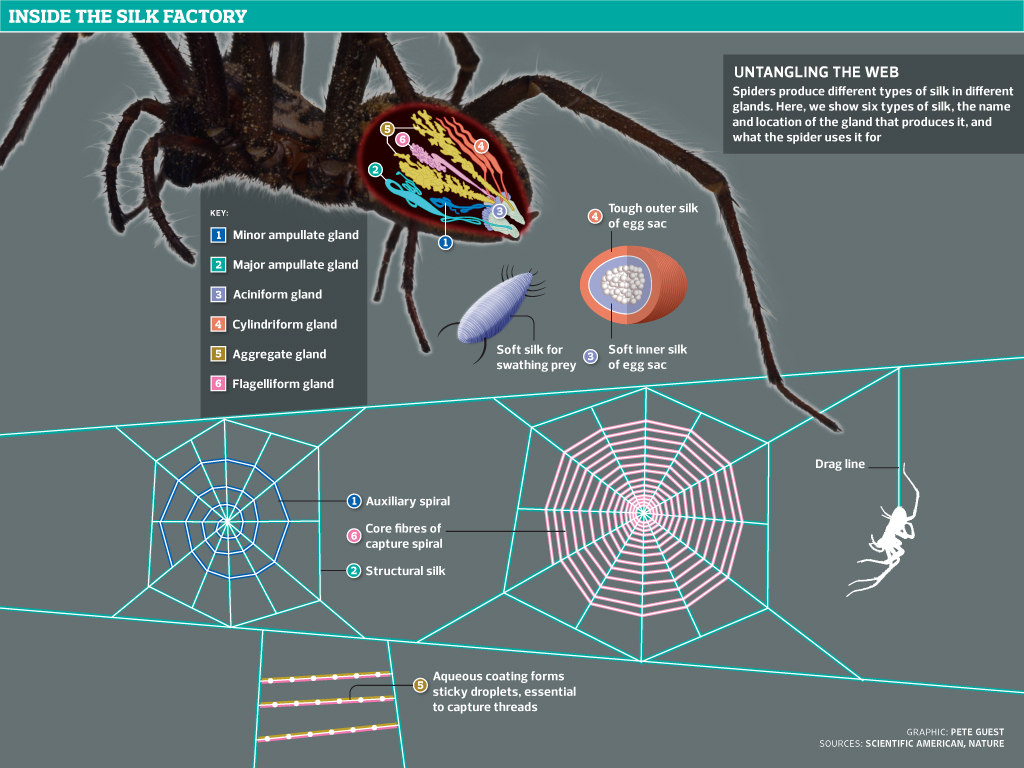
Species Hunt

Knowns, Unknowns and Unknown Unknowns
We’ve identified about 1.7 million species, but millions more remain unidentified (we think). The total number of non-fungal animal and plant species could be as high as 8 or 9 million (maybe). And the ratio of known to unknown differs quite a bit depending on which category of life you’re looking at.
How long will our invertebrate bias go unchecked?!?
And of course, none of this even mentions the microbes …
(via National Geographic)

Subscribe to:
Posts (Atom)